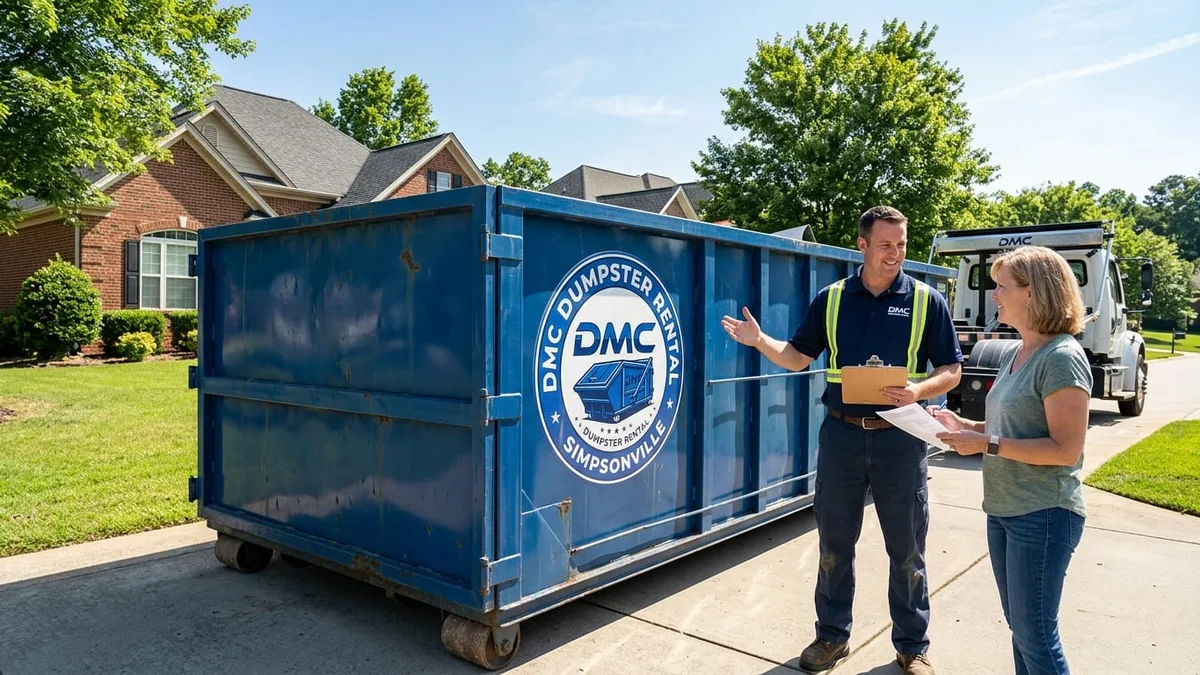
Most of what we haul is exactly what you’d expect — furniture, flooring, drywall, yard debris, general household junk. But South Carolina law specifically bans a short list of items from landfill disposal, which means they can’t go in a roll-off dumpster either, no matter how much room is left in the box. The good news is that Greenville County runs a Residential Waste & Recycling Center built to take exactly these items, so the fix is usually a short separate drop-off rather than a real obstacle to your project. Here’s what goes where.
None of the items below are unusual to find during a normal cleanout — an old car battery in the garage, a dead TV in a spare bedroom, a stack of worn tires behind the shed. The point of this guide isn’t to complicate your project, it’s to make sure those specific items don’t end up loaded into the dumpster by accident, where they’d have to be pulled back out before pickup anyway.
Your Dumpster and the County Recycling Center Do Different Jobs
Think of the two as complementary, not competing. A dumpster rental is built for volume — the bulk of a cleanout, remodel, or construction job, delivered to your driveway and hauled away in one trip. The Greenville County Residential Waste & Recycling Center is built for a specific short list of banned or specialty items that need separate handling by law, not for general household debris. Most Simpsonville projects need both: a dumpster for the bulk of the job, and a separate trip — often just one bag or box — for whatever falls on the banned list below.
Whole Tires: Landfill Banned Under § 44-96-170
South Carolina bans whole tires from landfill disposal outright under S.C. Code § 44-96-170, and a $2 fee applies at the time of sale or disposal to fund the state’s tire management program. That means tires can’t go in your roll-off dumpster under any circumstance — they need to go to a registered tire retailer or an approved collection point instead. If you’re clearing out a garage or property with old tires on it, pull those aside before the container fills up around them, since they’ll need separate handling regardless of what else is in the load.
Lead-Acid Batteries: Banned Under § 44-96-180
Car batteries and other lead-acid batteries are banned from South Carolina landfills under S.C. Code § 44-96-180. Most auto parts stores and battery retailers take these back, often at no charge, since the lead and acid inside are valuable to recycle and hazardous to bury. If a garage cleanout turns up an old battery from a car, mower, or backup power system, set it aside for a battery retailer rather than tossing it in with everything else.
Why These Bans Exist
Each of these categories shares a common thread: the material inside is either hazardous if it leaches into groundwater from a landfill, or valuable enough that recycling it recovers real resources instead of burying them permanently. Lead and sulfuric acid from batteries, refrigerants and metals from appliances, rubber and steel belting from tires, and the metals inside circuit boards are all things South Carolina’s program is built to keep out of the waste stream and back into productive use. Understanding the reasoning doesn’t change what you need to do with these items, but it helps explain why the state treats them differently from a couch or a box of old clothes.
White Goods: Major Appliances Under § 44-96-200
“White goods” is the legal term for major appliances — refrigerators, freezers, washers, dryers, water heaters, and similar large units — and South Carolina bans them from landfill disposal under S.C. Code § 44-96-200. These typically need a separate appliance pickup or drop-off, sometimes through a scrap metal recycler, since most contain materials or components that require specific handling before disposal. If a kitchen or laundry room cleanout is part of your project, flag the appliances when you book so we can tell you they’re not part of the dumpster load and point you toward the right option.
Electronics and TVs: A Real Statewide Ban Since July 2011
This is the one that surprises people who’ve rented dumpsters in other states: South Carolina has run a genuine, enforced statewide ban on landfilling electronics and TVs since July 2011, under S.C. Code §§ 48-60-05 et seq. It’s not a suggestion or a best practice — computers, monitors, televisions, and similar electronics are legally barred from landfill disposal in this state, full stop, which means they can’t go in a roll-off dumpster either. The Greenville County Residential Waste & Recycling Center accepts electronics specifically for this reason, and it’s worth a dedicated trip if you’re clearing out an office, an entertainment center, or an old computer setup as part of a larger cleanout.
This one catches out-of-state renters and even some longtime residents off guard, since plenty of states leave e-waste disposal as an optional recommendation rather than an actual legal requirement. In South Carolina it’s not optional. If you’re managing an estate cleanout or an office clear-out where electronics are a significant part of the volume, plan for a separate electronics drop-off from the start rather than treating it as an afterthought.
What Belongs in Your Dumpster
Outside of the banned categories above, the list of what you can put in a roll-off is long: furniture, cabinetry, flooring, drywall, general construction debris, yard waste, and standard household junk are all fair game across our size lineup. Asbestos is the one universal exception with no recycling workaround — it’s never permitted in any container and always requires a licensed abatement contractor, regardless of size. Paint, fuel, motor oil, and other chemicals are standard prohibited items as well. For the complete breakdown by category, see our guide on what can go in a dumpster in South Carolina.
Outside Greenville County: Check Your Own County’s Program
We serve addresses across Greenville, Laurens, Anderson, and Spartanburg Counties, and the banned-item laws above apply statewide — but the recycling drop-off point doesn’t. If your project is in Williamston, Belton, or Piedmont, you’re in Anderson County and should use its equivalent recycling and collection program rather than Greenville County’s center. Same goes for Pelham and Reidville in Spartanburg County. The state bans apply everywhere we deliver; the specific drop-off location just depends on which county your address sits in.
Sorting It Out Before Your Container Arrives
None of this needs to complicate your project — most jobs turn up one or two banned items at most, not a dozen. When you call to book, mention anything you know is coming out that might fall on this list — an old appliance, a car battery, a stack of tires from the shed — and we’ll tell you up front what needs to be set aside rather than having it turn up as a problem on pickup day. Call DMC Dumpster Rental Simpsonville at (864) 432-6521, or see our junk removal and estate cleanout pages if your project is likely to turn up a mix of these items.