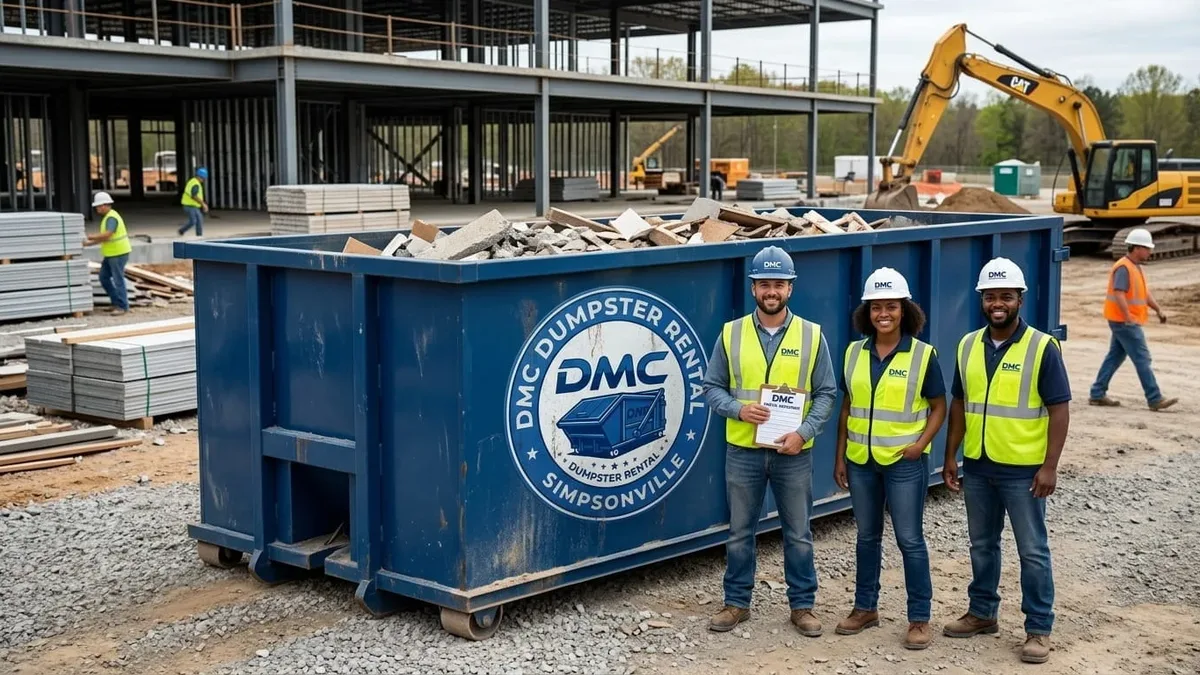
Renting a dumpster is usually the easy part — the harder question is what you’re actually allowed to put in it. Most of what fills a roll-off in the Simpsonville area is unremarkable: drywall, furniture, flooring, boxed-up junk, yard debris, packaging, old cabinetry. That stuff goes in without a second thought. But South Carolina law flags a specific short list of items that cannot be landfilled, full stop, regardless of what any individual hauler’s policy says — and a couple of those are genuine surprises to people who assume everything eventually just goes to the dump. Below is the real breakdown, organized by what the law actually says, so you know before you load rather than after.
What Fills Most Dumpsters Without Issue
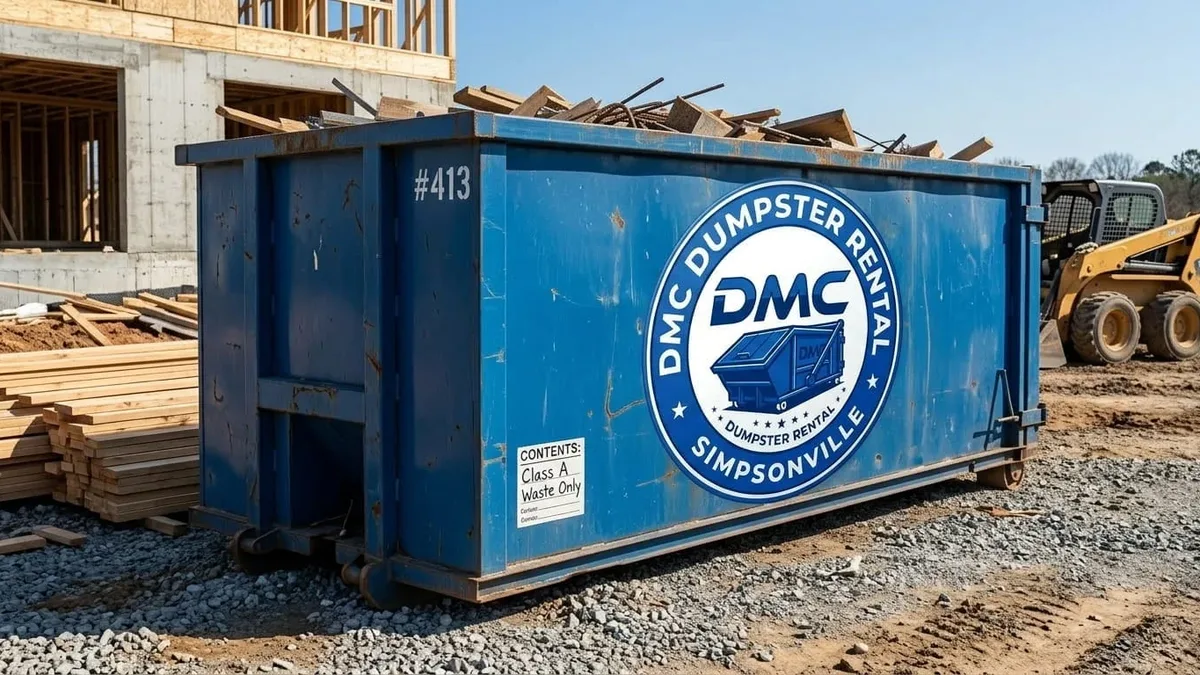
General household and construction debris makes up the bulk of nearly every load we haul: furniture, mattresses, carpet and padding, cabinetry, drywall, wood and lumber scraps, siding, roofing shingles, flooring, boxed household goods, non-hazardous packaging, and yard waste like branches and brush. If you’re not sure whether a specific item fits that description, it’s almost always faster to call us at (864) 432-6521 and describe it than to guess. The categories below are the exceptions, not the rule — and they’re exceptions with real legal weight behind them.
Whole Tires: An Outright Landfill Ban
Under S.C. Code § 44-96-170, whole tires are banned from landfill disposal in South Carolina — this isn’t a surcharge program or a soft discouragement, it’s a legal prohibition. A $2 per-tire fee is collected at the point of sale or disposal specifically to fund proper tire recycling infrastructure across the state. Practically, that means whole tires cannot go in a roll-off dumpster here; they need to go to a registered tire retailer or a dedicated tire collection point instead. If your project involves clearing out a garage, a barn, or a property with a stack of old tires on it, set them aside and handle them separately rather than tossing them in with everything else.
Lead-Acid Batteries
S.C. Code § 44-96-180 bans lead-acid batteries — the kind found in cars, trucks, boats, and most gas-powered lawn equipment — from landfill disposal. These batteries contain lead and sulfuric acid, both of which are exactly the sort of material landfills aren’t built to contain safely long-term. The good news is that lead-acid batteries have real recycling value, and most auto parts stores and battery retailers will take an old one off your hands, often for free or with a small core credit. Keep them out of the dumpster and drop them at a retailer instead.
White Goods — Major Appliances
Refrigerators, freezers, washers, dryers, water heaters, and similar major appliances — collectively known as “white goods” — are banned from South Carolina landfills under S.C. Code § 44-96-200. This one catches a lot of people off guard during a kitchen remodel or a full property cleanout, because an old refrigerator sitting by the curb looks like ordinary bulk trash. It isn’t, legally speaking. White goods typically contain refrigerants, oils, and other components that need to be removed and handled separately before the metal shell can be recycled. If your project involves swapping out appliances, tell us up front — we can advise on how to route them properly rather than have them show up buried in a load headed to the landfill.
Electronics and TVs: A Real Statewide Ban Since 2011
This is the one that surprises people most, because plenty of states only recommend keeping electronics out of the trash. South Carolina doesn’t recommend it — it legally bans it. Since July 2011, South Carolina has had a statewide landfill ban on electronics and televisions, codified under S.C. Code §§ 48-60-05 et seq. and administered by the state’s environmental services agency. Old TVs, computers, monitors, printers, and similar electronic devices cannot legally go into a landfill anywhere in South Carolina, which means they can’t go in a roll-off dumpster headed there either. This law has been on the books for well over a decade now, but we still find electronics tucked into loads more often than any other banned category — usually because someone genuinely didn’t know the ban existed, not because they were trying to skirt it. Greenville County and the surrounding counties in our service area maintain dedicated electronics recycling drop-off points for exactly this reason; ask us and we can point you toward one near you.
Asbestos: Never Permitted, No Exceptions
Asbestos is never allowed in a roll-off dumpster, anywhere, under any circumstances. If you’re working on a home built before the 1980s — common throughout older parts of Simpsonville, Fountain Inn, and the wider Golden Strip — and you suspect old insulation, floor tile, popcorn ceiling texture, or siding might contain asbestos, stop and have it tested before demolition begins. Suspected or confirmed asbestos-containing material requires licensed abatement handled by a certified contractor, with its own separate, regulated disposal process. This isn’t a matter of picking the right container size — it’s a health and legal issue that sits entirely outside what a standard dumpster rental can handle, and it’s worth building the extra step into your renovation timeline rather than discovering it mid-teardown.
Paint, Fuel, Chemicals, and Medical Waste
Liquid paint, motor oil, gasoline and other fuels, solvents, pesticides, and general household or automotive chemicals are standard prohibited items in any dumpster, along with medical waste of any kind — sharps, medications, or biohazard material. Most of these have dedicated household hazardous waste drop-off programs run through your county; dried-out latex paint is often the one exception that can go in as ordinary solid waste once it’s fully cured, but check before assuming. If you’re cleaning out a garage or shed and find old cans of stain, thinner, or half-used chemical containers, set them aside in their own pile rather than mixing them into the main debris load.
Why This List Matters More in South Carolina Than Some States
A few of the categories above — particularly white goods and electronics — are treated as loose recommendations in some parts of the country. South Carolina has put actual statutes behind them, which means loads containing banned material can create real compliance problems, not just inconvenience. It’s a good reason to flag anything you’re unsure about before it goes in the container rather than after. We’d rather answer a quick question on the front end than sort a mixed load on the back end.
When in Doubt, Ask Before You Load
None of this is meant to make renting a dumpster feel complicated — the overwhelming majority of what people clear out during a renovation, cleanout, or construction project is completely fine to load. But if you’ve got a garage full of unknowns, an older home with materials you’re not sure about, or a mix of household junk and appliances, it’s worth a quick call before delivery. Reach our team at (864) 432-6521 and describe what you’re clearing out; we’ll tell you plainly what goes in the box and what needs to be routed elsewhere. You can also browse our full list of services or check dumpster sizes if you’re still working out logistics, and see our permit guide if placement location is also part of your planning.