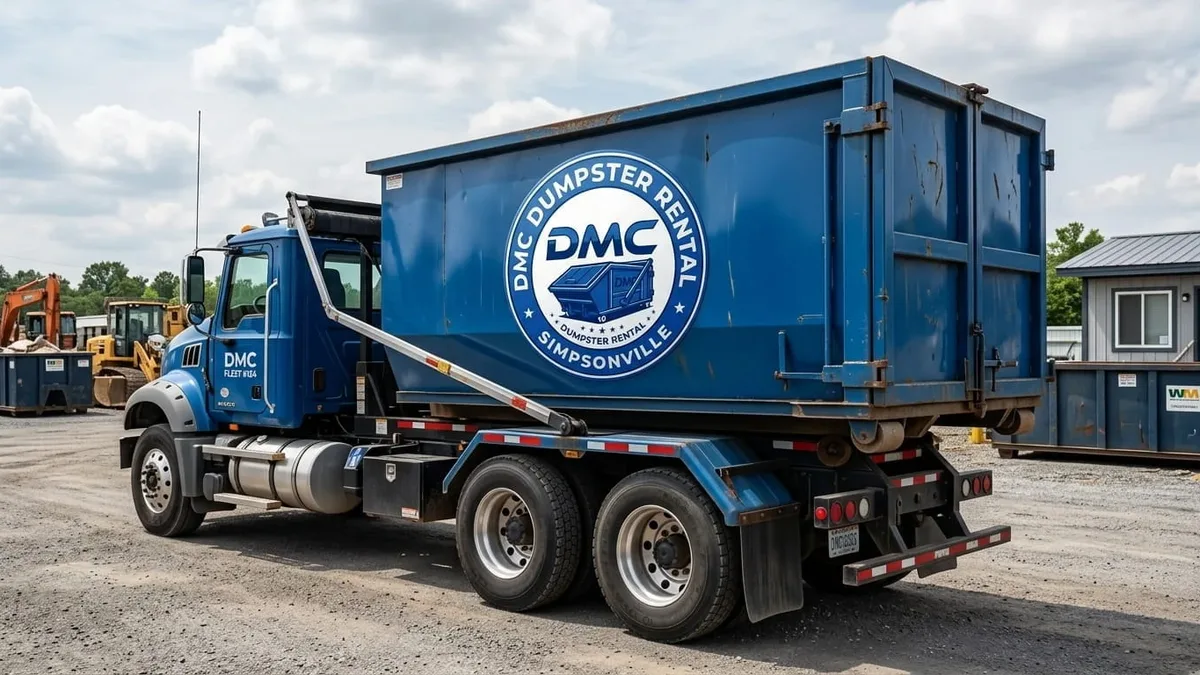
“Do I need a permit for this?” is one of the first questions we get on almost every booking call, and the honest answer is: it depends entirely on where the dumpster is going to sit. The Golden Strip and the wider Upstate service area we cover span one city with its own clear rule, several other incorporated towns each running their own separate process, and a good amount of unincorporated county land that falls under yet another authority. None of that needs to be confusing once it’s laid out plainly — so here’s exactly how permitting breaks down depending on your address.
Private Property: No Permit, Anywhere
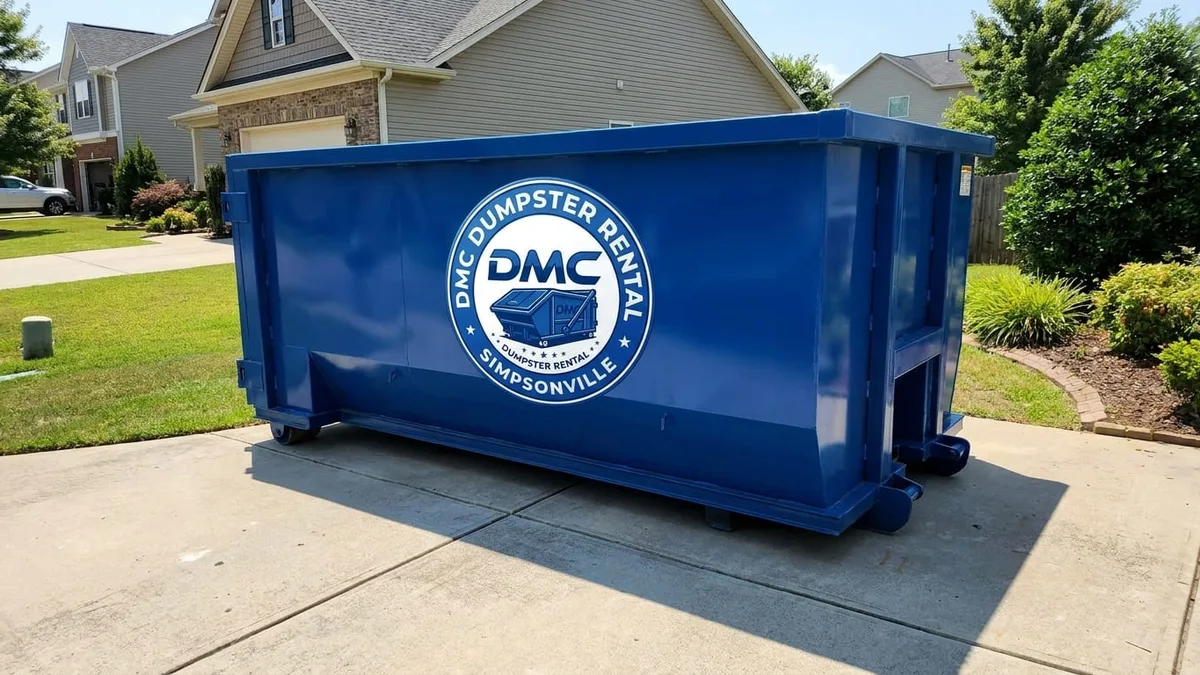
If the dumpster is going to sit entirely on private property — a driveway, a yard, a gravel pad, a parking lot you own or lease — no permit is required anywhere in our service area, whether that’s Simpsonville itself, Mauldin, Greer, or a rural stretch of Laurens County. This covers the overwhelming majority of residential bookings we handle. If you’ve got the space to keep the container off the street entirely, that’s the simplest path, and it’s the first thing worth checking before you assume a permit is needed at all.
Inside Simpsonville City Limits: The Street Cut Permit
If placement requires putting the dumpster on a public street or right-of-way within Simpsonville city limits, the City of Simpsonville requires a Public Works Street Cut Permit. The confirmed flat fee for this permit is $500. This is a real, published figure — not an estimate — so if street placement is unavoidable for your project, it’s worth factoring that cost into your planning early rather than being surprised by it after the fact. In our experience, most homeowners can avoid this fee entirely by using driveway or yard space instead, but for tighter downtown lots near the clock tower or older properties with limited off-street space, street placement sometimes ends up being the only realistic option. If that’s your situation, mention it when you call and we can walk you through what the permit process involves.
Other Incorporated Towns Run Their Own Process
Here’s an important distinction: Simpsonville’s $500 Street Cut Permit fee applies only inside Simpsonville city limits. It does not carry over to the other incorporated cities and towns in our service area. Mauldin, Fountain Inn, Greer, Greenville, Gray Court, Laurens, Williamston, and Belton each administer their own separate municipal permit process for right-of-way placement, with their own applications, fees, and timelines. If your project sits in one of these towns and street placement is on the table, the right move is to call that city’s public works or permitting office directly rather than assume Simpsonville’s rule — or fee — applies. We’re happy to help point you toward the right department when you call us to book, since we work across all of these towns regularly.
Unincorporated County Land: County Authority Takes Over
A meaningful share of our service area — places like Five Forks, Fork Shoals, Conestee, Golden Grove, Ware Place, Piedmont, Pelham, and Reidville — sits outside any incorporated city or town limit. On unincorporated land, permitting authority defaults to the county, and which county depends entirely on where the property sits:
- Greenville County — Greenville County Building Safety & Codes Compliance handles right-of-way and encroachment matters for unincorporated Greenville County addresses.
- Anderson County — Anderson County Building & Codes Department handles the equivalent process for unincorporated Anderson County addresses.
- Spartanburg County — Spartanburg County Building Codes Department covers unincorporated Spartanburg County addresses.
If you’re not sure which county your property falls under, that’s a completely normal question — the Golden Strip sits close to several county lines, and it’s not always obvious from a street address alone. Let us know your address when you call and we can help point you to the right department.
State Routes and Highways: SCDOT’s Narrow Role
One more wrinkle worth knowing: the South Carolina Department of Transportation (SCDOT) only gets involved when a state route or highway right-of-way is directly involved — not ordinary city or neighborhood streets. This comes up occasionally on commercial projects fronting a state road, but for the vast majority of residential and even most commercial placements, SCDOT simply isn’t part of the picture. If your project does front a state highway, flag it when you call so we can help you figure out whether that changes anything about placement.
Why the Rules Change So Much Across One Service Area
It can feel like a lot to track, but the underlying logic is fairly simple once you see the pattern: South Carolina divides authority between incorporated municipalities and counties, and each incorporated town sets its own rules for its own streets. Our service area happens to touch one city with a clearly published fee (Simpsonville), several other incorporated towns that each guard that authority independently, and three separate counties picking up everything unincorporated. It’s not a quirk specific to dumpster rental — the same jurisdiction lines apply to things like fence permits and driveway work — but it does mean a rule of thumb that works in one town can be flatly wrong two miles down the road once you’ve crossed into the next jurisdiction. That’s the main reason we’d rather confirm your specific address than give a general answer over the phone.
How to Avoid a Permit Altogether
For most residential projects, the simplest way to skip permitting entirely is to plan for private-property placement from the start — a driveway or yard spot that our delivery driver can access without needing to block a lane or curb. When we schedule your delivery, we’ll talk through placement options with you, including whether your specific property has enough clearance to keep things off the street. If you already know street placement is unavoidable — a tight downtown lot, no driveway, an active construction site with no other option — tell us up front so we can help you understand the permit process for your specific jurisdiction before delivery day rather than after.
Get the Right Answer for Your Address
Because permit rules here depend so heavily on the exact address — city limits versus unincorporated land, and which of three counties is involved — the fastest way to get a definitive answer is to call and tell us where the project is. We book residential, commercial, and construction dumpster rental jobs across the whole Golden Strip and surrounding counties, and we can tell you plainly whether your project needs a permit, and if so, who to contact. Call us at (864) 432-6521, or see our full service area to confirm we cover your town. If you’re also working out what size container you’ll need alongside placement, our sizing guide is a good next stop.