People who move to the Upstate from elsewhere sometimes assume South Carolina’s weather story is all about hurricanes on the coast. Simpsonville sits well inland, in the Piedmont, and the risk that actually shapes our spring is different — severe thunderstorms and the occasional tornado, arriving fast and leaving a specific kind of debris behind. If you’re planning a project that might overlap with that season, it’s worth understanding the pattern before you book a delivery date.
None of this means you should avoid scheduling a project in the spring — it’s six months of the year, and plenty of Golden Strip renovations, cleanouts, and remodels happen right through it without incident. It just means the timing conversation is worth having up front, the same way you’d ask a contractor about their schedule before locking in a start date.
The Season: Roughly March Through June
Severe thunderstorm and tornado risk across the Upstate builds through March, peaks in the spring months, and typically tapers off by early summer — roughly a March-to-June window each year. During that stretch, watches and warnings are a regular part of the local forecast, and the storms that do turn severe can bring straight-line wind gusts and hail on top of whatever rain comes with them. It’s not constant, but it’s frequent enough that anyone scheduling outdoor work — roofing, tree removal, a landscaping overhaul — should expect at least a few forecast-driven delays somewhere in the window.
November 11, 2002: The Storm People Still Bring Up
Most of our service area’s severe weather history is a string of close calls and minor damage, but one event stands out as a genuine, documented tornado on the ground. On November 11, 2002, the National Weather Service confirmed an F1 tornado that tracked from Simpsonville toward Fountain Inn, causing real structural damage along its path. It’s the local reference point people reach for when they talk about “that one storm” — a reminder that tornadoes in the Upstate aren’t a hypothetical, even outside the typical spring window, and that the damage they leave behind is the kind that generates roofing and cleanup work for weeks afterward.
Not a One-Off: 35 Tornadoes Since 1952
The 2002 event is memorable, but it’s one entry in a longer record. National Weather Service Greenville-Spartanburg data documents 35 tornadoes in Greenville County alone since 1952 — a track record that makes clear this is a recurring regional risk, not a single bad afternoon that happened to make the news. Most of those events were smaller and less newsworthy than the 2002 tornado, but the pattern is consistent: spring storm systems moving through the Piedmont regularly produce rotation, and a share of them touch down.
Watches vs. Warnings: What Actually Changes Our Plan
Not every forecast mention of severe weather affects a scheduled delivery — a severe thunderstorm watch covering the whole Upstate for an afternoon is routine spring weather and rarely changes anything on our end. What we pay closer attention to is a warning issued specifically for our delivery window, or a tornado watch that upgrades to a warning as a cell approaches. That’s the point where we’ll call and talk through moving a delivery by a few hours or a day, rather than sending a truck out into conditions that make the drop unsafe for our driver and pointless for you if the container just gets moved again once the storm passes.
What the Damage Usually Looks Like
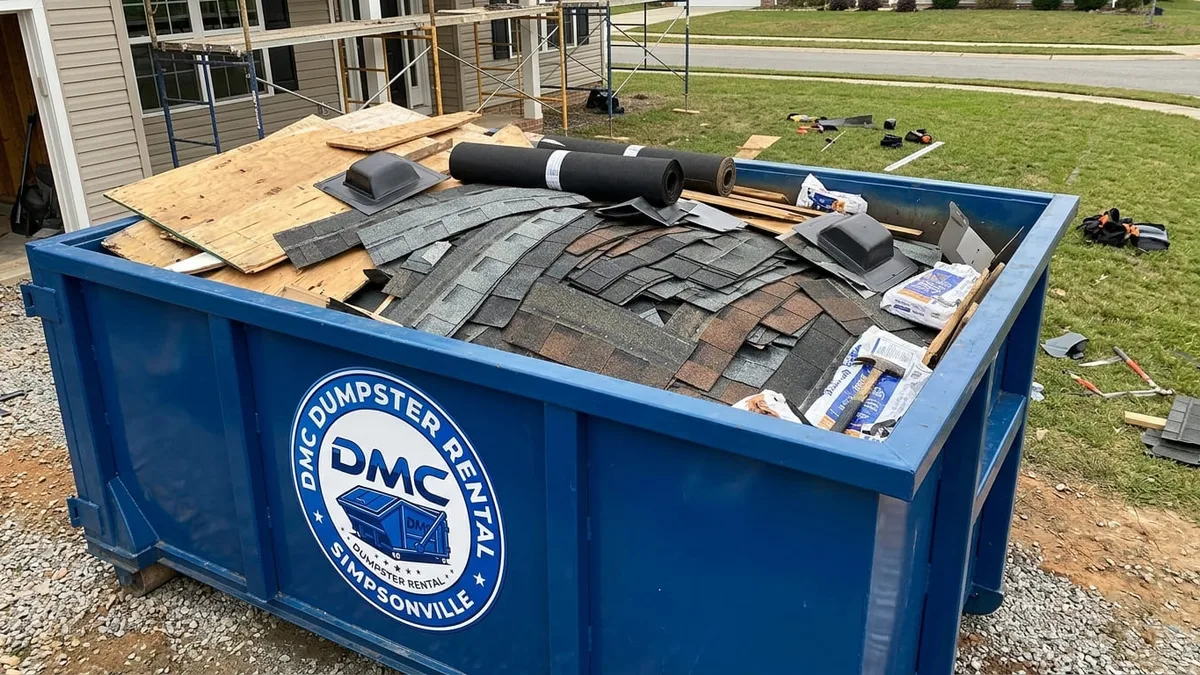
Full tornado damage is the exception, not the rule — the more common outcome of a severe storm passing through is wind and hail damage that’s serious but not headline-making. Downed tree limbs are the most frequent call we get after a storm, followed by damaged roofing, dented or torn siding, and fencing knocked over by straight-line wind gusts. None of it is dramatic on its own, but added up across a property it’s often more debris than a homeowner expects, and it tends to arrive all at once rather than spread across a normal project timeline. If a roof is part of what you’re dealing with, our roofing tear-off sizing guide covers how to size that specifically, and general yard debris — limbs, brush, storm-snapped branches — is exactly what our yard waste service is built for.
Fencing is worth calling out separately, since it’s one of the most common storm casualties in neighborhoods with wood privacy fencing — a run of panels caught broadside by straight-line wind can come down in sections along an entire property line. It’s bulky, awkward to stack in a truck bed, and exactly the kind of debris a driveway container handles far more efficiently than multiple trips to a transfer station.
How We Build Flexibility Into Storm Season
From March through June, we plan deliveries with the forecast in mind rather than treating every booking as fixed. If a watch or warning lines up with a scheduled drop-off, we’d rather shift the delivery by a day than have an empty container sitting out in a storm cell, or a loaded one blocking a driveway someone needs clear in a hurry. On the other side of a storm, demand for containers spikes fast as cleanup crews and homeowners deal with debris all at once — if you know a storm is forecast and you’re likely to need a container afterward, calling ahead to get on the schedule early is the single best way to avoid a wait. We’d rather talk through timing on the front end than have you competing for the next available truck once the storm has already passed.
Debris From a Single Storm Can Outpace a Normal Project
One thing that catches homeowners off guard after a bad storm is just how much debris a single afternoon can generate compared to a planned project. A remodel or cleanout produces debris steadily over days or weeks, giving you time to gauge how full a container is getting. Storm debris arrives all at once — a mature oak limb, a section of fence, and a stretch of damaged roofing can add up to more volume than an entire month of a typical renovation. If you’re dealing with storm cleanup and you’re not sure how much debris you’re looking at, describe the damage on the phone rather than guessing at a size — a downed hardwood limb alone can fill more of a container than people expect, and mixing it with roofing or siding debris changes the weight math too.
A Secondary Note: Summer Heat and Humidity
Once storm season eases, South Carolina’s summer brings the heat and humidity typical of the Southeast — not a scheduling risk the way spring storms are, but worth a mention for anyone planning outdoor debris work. Loaded containers sit longer in the heat without an issue, but crews working a cleanout in July or August often prefer earlier delivery windows to get ahead of the afternoon heat. It’s a minor planning point compared to spring storm season, but one our scheduling team can work around either way.
Planning a Storm-Season Project
If you’re scheduling a project that falls inside the March-to-June window — a roof replacement, a landscaping job, or general cleanup you know is coming — mention the timing when you call so we can build in some flexibility from the start rather than reacting to a forecast change after the fact. Call DMC Dumpster Rental Simpsonville at (864) 432-6521 to talk through your project and timeline, or see our full services list for the type of cleanup you’re planning.